

Education Problems Affecting Students, Parents, and Teachers
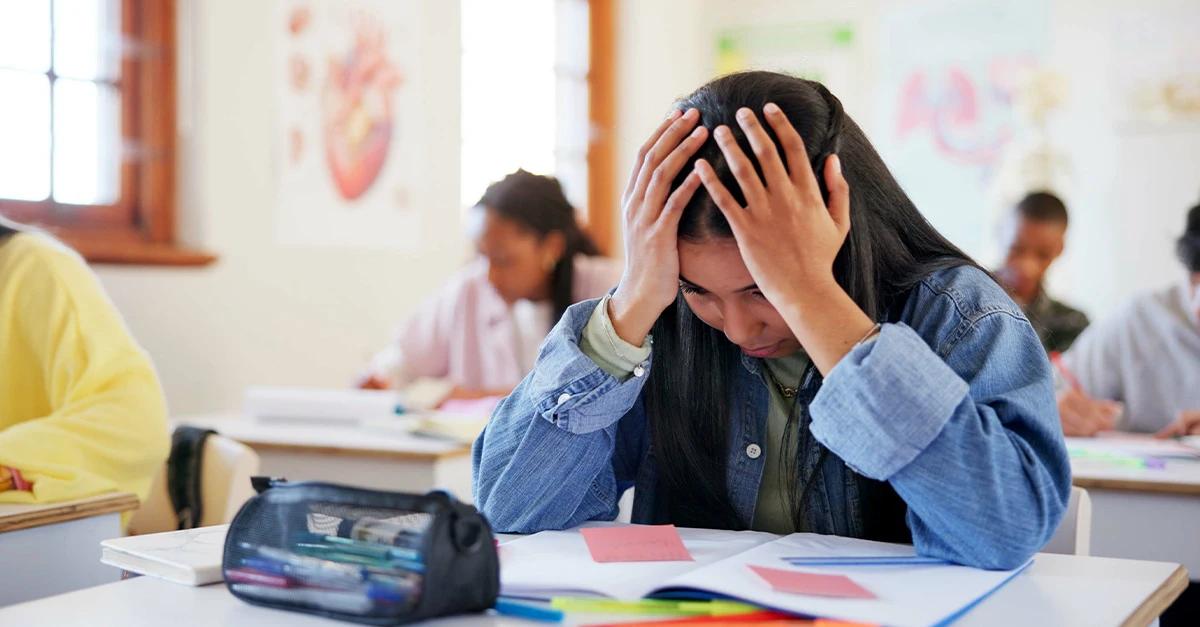
The lack of life skills education is not the only problem American education faces. Our schools are flooded with a myriad of issues that affect teacher and student performance, from government budget cuts to mental health crises to confusion about the role of AI in schools. These education problems are not just felt on a national level, but a personal one, leading to distracted and detached classrooms. The more these problems persist, the deeper these issues become.
So what are these problems that are closely affecting education? What are their lasting effects? And how can we do our part every day to make sure we target these issues in our own classrooms, empowering our students to truly succeed?
In this article, we’ll explore the education problems most affecting the well-being of students, parents, and teachers and discuss strategies to actively address them in our daily lives. (For a deeper dive into systemic issues facing our education system, alongside what we can do to help resolve them, see our “Tackling Today’s Issues in Education” article.)
Education Problems Affecting Students
AI in the Classroom
AI in the classroom is still a major hurdle to students’ education if used irresponsibly. In a recent article from The Atlantic titled, “I’m a High Schooler. AI is Demolishing My Education,” Ashanti Rosario describes a typical day in the classroom, full of casual cheating through AI—like sending math problems, English assignments, and even debate team arguments to ChatGPT.1 Rosario not only points to how much easier the temptation to cheat has become but also the long-term effects of her peers’ reliance on technology. She writes: “Many of us are so accustomed to outsourcing that we’re dulling the very instincts that we need to prevail in life: grit, critical thinking, and the ability to function smoothly under stress.”
Though AI can hold value in education, the everyday impact it has on students like Rosario can be extremely demotivating. This can even cause leading young learners to give in to cheating as well—because if everyone else is doing it, why shouldn’t they?
Teacher Support and Capacity
The teacher shortage continues to be prevalent in our schools, resulting in overworked educators forced into subjects they aren’t qualified to teach.2 As of 2025, an estimated 411,549 roles were either unfilled or filled by uncertified teachers—a figure that’s increased by 4,600 since 2024.3 Of course, these shortages directly affect our educators—but they affect our students too. Burnt-out educators can quickly create a classroom environment that’s hard to learn in. Unmotivated educators can lead to unmotivated students, resulting in a vicious cycle of disengagement in the classroom.
Mental Health
Mental health is an ongoing issue, with over 40% of young people from grades 9-12 experiencing symptoms of depression as of 2023.4 This affects all aspects of life, including school performance. Anxiety, depression, and other mental health problems can result in a lack of concentration, motivation, and even attendance. Without help, these symptoms might only increase and affect students even more.
Lack of Life Skills
The lack of life skills in education is another education problem affecting students today. Without properly setting them up for success through career exploration, financial education, and emotional and psychological skills, they graduate high school unable to grapple with real-life challenges.5 Students need these basic skills to be able to navigate our ever-changing world. Even the basics of durable skills like self-management and communication can give students an edge, allowing them to stand out to hiring managers and build positive connections with new people. Without this foundation, they’re often set at a major disadvantage.
Education Problems Affecting Parents
Student Behavior
Student behavior can directly affect parents.6 When students fall behind in their studies, parents can become stressed and worried about their academic performance and its long-term effects on graduation plans, like college. Not only that, but lack of engagement in class could point to equally worrisome problems, like mental health issues.
Teacher Shortage
With the teacher shortage still prevalent, parents may become concerned about the quality of education their child is receiving.7 This can result in them looking for alternatives such as private schools or homeschooling. But while these are both viable options, they can be costly and time-consuming. A lack of qualified teachers may also require parents to step in and provide their students with more academic support, like private tutors or homework help. However, even with these solutions, students still have a chance of falling behind academically, which can lead to long-term stress and financial strain for parents.
Government Funding
Government funding often results in unfair advantages in different school districts, leading to some students receiving an unequal education and fewer opportunities.8 Lower-income families are often at a disadvantage due to socioeconomic barriers, many of which stem from discriminatory practices like redlining and unequal, property tax-based school funding. This disparity largely falls to parents, who often feel they need to fill in the gaps by providing adequate tutoring, school supplies, and unprovided extracurriculars. This again can create additional stress on families as they try to make up for what their schools lack.
Lack of Communication
Parents often feel disconnected from their child’s school experience if they aren’t actively communicating with teachers. Especially in the case of chronic absenteeism, poor grades, and disruptive behavior in class, it can be hard for parents to address these issues at home if they don’t know they’re happening. But with teacher shortages resulting in larger classrooms to manage—and many parents’ work schedules making it challenging to have a meeting or call during standard times—it can be difficult for teachers to communicate as fully as they’d like.
Education Problems Affecting Teachers
Student Disengagement
When students don’t want to learn, teachers don’t want to teach. Student disengagement can be extremely disheartening, especially when educators are giving their all. Many of the issues mentioned above, coupled with other factors like socioeconomic disparity, can drive students to check out in class—or not even come to class at all. Chronic absenteeism and student disconnection with can cause lessons to slow and classrooms to lose more time to reteaching concepts. Writer Erica Walther speaks out on the issue on Truth for Teachers, saying: “In my travels and conversations with educators from coast to coast, there is a resounding panic from teachers feeling unprepared and ill-equipped to support disengaged students.”9
AI in the Classroom
Teachers are forced to track, recognize, and confront students when cheating takes place—a process that isn’t always easy as AI continues to advance. Even when these guidelines are enforced, AI can still bring up feelings of frustration that students aren’t actually learning. David Cutler, a teacher in Chestnut Hill, Massachusetts, voices his concern over students’ critical thinking and writing abilities, saying:
“Students can lean on it before developing the habits, patience, and skill that real writing demands. The slow, sometimes frustrating process of wrestling with a sentence, choosing the evidence that best supports an argument or discovering a new insight mid-draft—these are the moments when thinking happens, however time-consuming, inconvenient, or uncomfortable.”10
It’s a fear many teachers are feeling right now. Despite their best efforts, students can still find ways to use AI, leading to the loss of crucial abilities.
Lack of Resources
Resource gaps result in a lack of essential teaching resources, like adequate textbooks, class materials, and technology. Often, teachers must make do with what they’re given—or take from their own paycheck to provide their students with the best learning resources.11 While noble and altruistic, this just isn’t sustainable. Over time, teachers can become frustrated and even disillusioned with their careers if they are constantly having to rely on their own time and money.
Gaps in Prior Learning
The teacher shortage can have effects that last long after a class has ended. When taught by underqualified or inexperienced teachers, students can develop significant knowledge gaps. In later classes, their new teachers are left to address these gaps—while still being expected to meet grade-level standards.12 It can be impossible for teachers to build on prior knowledge if their students are lacking in it, resulting in a slower educational pace or teachers having to start from the ground up in their curriculum.
Teaching to the Test
The emphasis on test results and class data isn’t something just felt by students. Teachers are often left to prioritize these measures, leading to a lack of autonomy and added stress.13 Forced to follow rigid standards, this type of teaching may lead to uncreative lessons and data-driven learning unconcerned with student interests or needs.
What We Can Do
It’s true that there are issues plaguing American education, but there is hope—and ways we can combat these issues. Whether you’re a parent, student, teacher, or just passionate about education, here are some actions to address the problems that persist in our schools:
Students
- Use AI responsibly. AI can be a great tool for research and brainstorming, but it also presents real challenges—especially when boundaries around its use aren’t always clear. AI is a new tool that our world is still grappling with how to use successfully. Even educators and policymakers are still figuring out the best guidelines around AI usage. What we do know, though, is that AI should never replace critical thinking. Remember to use AI responsibly with homework and class assignments. Until we have a clearer understanding of its place in the classroom, try not to give in to pressure from people who use AI to cheat on assignments, and know that it’s only putting them at a disadvantage in the long run.
- Have patience with teachers. If you’re finding it hard to connect with your teacher or understand the material, know that you’re not alone. Teacher shortages impact everyone and often lead to larger class sizes, making it challenging for educators to give individual support. Even so, don’t hesitate to ask for help when you need it. When you’re able, share with your teacher what’s working for you and what isn’t. Teachers want you to succeed, and being open about your struggles helps them support you more effectively. Remember, learning is a team effort, and honest feedback helps both you and your teacher grow!
- Seek support. Asking for help may feel scary at first, but it’s one of the biggest steps you can take towards healing. If you are dealing with mental health problems, don’t hesitate to seek support from friends, parents, or a trusted teacher. Schools also often have counseling services readily available, though in a mental health emergency, don’t hesitate to call 911. Other free resources are the National Suicide Prevention Lifeline at 988, and the Crisis Text Line at 741741.
- Become a life-long learner. It’s understandable to feel frustrated by learning gaps, especially when they’re out of your control. But these moments don’t have to be discouraging—instead they can reveal what we’re truly interested in. What subjects do you want to learn more about? Let yourself go down rabbit holes and explore these topics to reignite your motivation, or talk to a teacher about resources to learn more. Learning is about more than just grades—it’s about growing your curiosity and building skills you’ll use far beyond school. When you follow what excites you, you’re investing in yourself for the long run.
Parents
- Connect with your child. If your child is struggling in school, try to listen without judgment and support them the best you can. Oftentimes, negative student behavior is a sign of something deeper going on. Instead of approaching a conversation with judgment and punishment, try and really understand what your child is going through and come up with solutions together.
- Support educators. With so much on educators’ plates, extra support from parents can be a huge help to them. This can be as simple as offering extra class resources, volunteering, or even sending a note of appreciation. Reminding teachers that they’re not alone can inspire them to be their best in the classroom.
- Push for equity and funding. Advocate for fair resources in your child’s school or district. This could involve attending school board meetings, joining parent advocacy groups, or supporting campaigns for increased school funding. Ensuring equitable opportunities helps all students succeed—not just those in well-funded districts.
- Connect with teachers. Take the initiative and reach out through email or even one-on-one meetings to gain a better understanding of how to support your child academically. Reaching out to teacher aides or talking to your child directly can also help provide helpful insights.
- Create a home environment that supports learning. Making an optimal space at home that supports your child’s learning can help them be their best. Support them in a daily routine of studying by giving them the space and time for academics. Ask questions beyond just grades—what do they find most interesting in class right now? What do they enjoy learning about? Shifting focus from grades to curiosity can help students cultivate a mindset based on true learning.
Teachers
- Explore creative lesson plans. When a class is disengaged, it can be difficult to teach confidently, especially if you’re already put in a difficult environment with mandated curricula, huge classes, and limited support. Though the problems of student disengagement are often outside of your control, leaning into creative lesson ideas can help mitigate student disengagement and make classrooms feel alive. When possible, give students the option for how they learn and leave room for open discussion in the classroom. Blending curriculum with exciting progressive teaching methods like hands-on and experiential learning can help reignite classrooms and foster curiosity within students.
- Use your best judgment with AI. Cheating with AI is a problem. But schools will eventually provide clearer guidelines for usage as our world continues to understand and adapt to new technology. Though it can be disheartening, teach students about ethical AI use and why critical thinking is so important. Focus on building up these skills in the classroom through in-class activities and continue to use best judgment with cheating.
- Empower student voices. If students are checked out in class, don’t wonder why—ask them! Open communication in the classroom helps students engage with the material.14 Make students feel genuinely heard, seen, and supported by regularly asking for feedback on what’s working and what’s not. Not only will lessons become more student-oriented, but students will feel like they have a say in their education.
- Advocate for equity. Continue to fight for fair access to resources, support services, and extracurricular opportunities for all students. This might involve collaborating with administrators, lobbying for funding, or sharing successful strategies with colleagues in under-resourced schools. The more these conversations happen, the more awareness of the situation can grow and lead to real change.
- Seek student transparency. Building transparency and trust can be challenging with so many demands on your time. If you’re able, find small ways to meet students where they are. Encourage them to share their struggles and successes openly. This could be through reflective journals, anonymous surveys, or classroom discussions. If a classroom is built on positivity and zero judgment, it can be easier to identify gaps and provide support before issues escalate.
- Find balance in teaching methods. It’s difficult to meet students where they are when standardized testing and curricula don’t allow for much change. If you can, try to find balance in the classroom with project-based, personalized, and student-centered learning techniques. Mix in discussions, activities, and topics of interest related to the curriculum whenever possible to keep students engaged. (You can also find more resources and sample activities in our articles on leadership activities, critical thinking activities, reflection questions for students, and goal-setting!)
Everyone
- Challenge the stigma. Have conversations about the less-often-discussed education problems—like teacher burnout and student mental health. The more comfortable we become talking about these issues, the more solutions we can find to address them. These stigmas being normalized can also help students and teachers reach out for help if they’re struggling in class.
- Advocate for education. Speaking up matters! Attend school board meetings, write to policymakers, or join parent-teacher associations to advocate for these issues like fair AI practices, smaller class sizes, or fair teacher pay. Every voice counts in creating a more equitable, stronger education system.
- Celebrate and support teachers. Education isn’t possible without our teachers. Show your support through thank-you notes, volunteering, or recognizing achievements publicly. When teachers feel valued and supported, they can feel more motivated to provide the best learning environment for their students.
- Strive to improve learning. Everyone can take steps to enhance the learning experience. Students can embrace curiosity and resilience, parents can reinforce learning at home, and community members can provide mentorship, tutoring, or educational resources. Together, we can ensure that education is not just about grades, but fostering a life-long love for learning in students and preparing them to thrive.
Reminders
These are difficult conversations to have, but necessary ones. Addressing these education problems—and how they affect people—is the first step in working towards solutions for them. We can continue to bring awareness and strive to rectify these issues—but they also require action.
No matter who you are, you can bring about the change you want to see in the education system. Continue to speak out, support our teachers, and bring about a culture change of patience and understanding as we continue to grapple with inequity, technological uncertainties, and knowledge gaps.
At ERA, we’re focused on bringing life skills to education so students can be optimally prepared for life after graduation. Our students are often left floundering after high school—because they weren’t exposed to their options, they jumped into college without knowing why, or they weren’t given the skills to thrive on their own. By helping students understand themselves, others, and all of the opportunities at their fingers, we help equip them with confidence and resilience.
Interested in helping the cause? Learn about ERA’s values and core learning curriculum, or contact us to get involved. Together, we can bring about positive change in education!
P.S. Don’t forget to check out our other article on systemic educational issues and how we can work together to solve them!
Resources
- Rosario, A. (2025, September 4). I’m a high schooler. AI is demolishing my education. The Atlantic. https://www.theatlantic.com/technology/archive/2025/09/high-school-student-ai-education/684088/ ↩︎
- Tan, T. S., Comai, S., & Kemper Patrick, S. (2025, August 4). 2025 update: Latest national scan shows teacher shortages persist. Learning Policy Institute. https://learningpolicyinstitute.org/blog/2025-update-latest-national-scan-shows-teacher-shortages-persist ↩︎
- Learning Policy Institute. (2025, October 16). An overview of teacher shortages: 2025. https://learningpolicyinstitute.org/product/overview-teacher-shortages-2025-factsheet ↩︎
- Centers for Disease Control and Prevention. (n.d.). Youth mental health: The numbers. https://www.cdc.gov/healthy-youth/mental-health/mental-health-numbers.html ↩︎
- Heubeck, E. (2025, May 20). High school grads lack clarity on next steps, survey shows. Education Week. https://www.edweek.org/teaching-learning/high-school-grads-lack-clarity-on-next-steps-survey-shows/2025/05 ↩︎
- Tian, J., & Zhang, R. (2025). The impact of perceived adolescent academic burnout on parental acceptance and empathic behavior: A chain mediation model. BMC Psychology, 13(1). https://doi.org/10.1186/s40359-025-03166-1 ↩︎
- Study.com. (n.d.) Learning loss fears amplified as seen in survey on teacher and staff shortages. https://teachinglicense.study.com/featured-insights/learning-loss-fears-due-to-teacher-shortage.html ↩︎
- Bireda, S. (n.d.). Funding education equitably. Center for American Progress. https://www.americanprogress.org/article/funding-education-equitably/ ↩︎
- Walther, E. (2023, February 16). A fresh approach to supporting students who are disengaged and task-avoidant. Truth For Teachers. https://truthforteachers.com/supporting-disengaged-task-avoidant-students/ ↩︎
- Cutler, D. (2025, October 21). Educator voice: Generative AI has no place in my classroom. PBS. https://www.pbs.org/newshour/classroom/classroom-voices/educator-voices/2025/10/generative-ai-has-no-place-in-my-classroom ↩︎
- Edgell, H. (2025, August 29). Teachers still spend their own money on school supplies, despite efforts to help stock classrooms. KCUR. https://www.kcur.org/2024-08-19/teacher-school-supplies-classroom-resources ↩︎
- Murphy, D. (2025, January 15). New analysis: Michigan’s teacher shortage problem is worsening opportunity gaps for students who are the most underserved. EdTrust-Midwest. https://midwest.edtrust.org/press-release/new-analysis-michigans-teacher-shortage-problem-is-worsening-opportunity-gaps-for-students-who-are-the-most-underserved/ ↩︎
- Jerrim, J., & Sims, S. (2021). School accountability and teacher stress: International evidence from the OECD talis study. Educational Assessment, Evaluation and Accountability, 34(1), 5–32. https://doi.org/10.1007/s11092-021-09360-0 ↩︎
- Liu, X. (2024). Effect of teacher–student relationship on academic engagement: The mediating roles of perceived social support and academic pressure. Frontiers in Psychology, 15. https://doi.org/10.3389/fpsyg.2024.1331667 ↩︎
Looking for Something More?
The Education Revolution Association is always ready to learn — we're obsessed with insights into American education! Is there an article topic you'd like to see us explore? A deep dive you just can't seem to find anywhere else? Let us know at our contact page!