

The Power of Experiential Learning in the Classroom
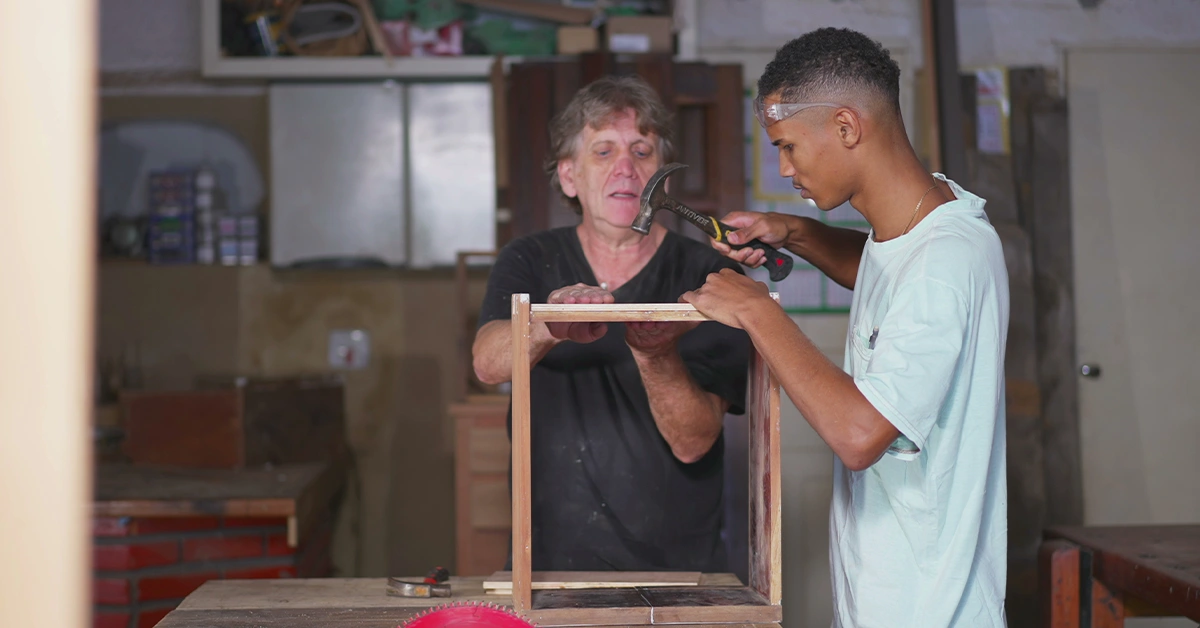
Everyone learns differently—though one approach consistently stands out for helping people understand and retain new concepts. Experiential learning is something we’ve all done countless times before. If you’ve cooked up a new recipe, spoken a new language, or even learned to ride a bike: all of that is experiential learning in effect.
In the classroom, this learning process can be especially impactful. Not only do students engage with material in a deeper way, but they walk away with a personal experience that complements and expands their knowledge. Teachers can use experiential learning to their benefit, helping their students not just remember class material but understand it through first-hand encounters and reflection.
In this article, we’ll explore the main elements of experiential learning, its processes, and ways teachers can implement specific learning strategies in curriculum.
What is Experiential Learning?
Experiential learning is the process of “learning by doing.” Instead of lecture or reading-based education, experiential learning is done through active participation with the source material and reflection. Some examples of this in everyday life are:
- Learning to drive a car and coming up with solutions to improve for challenging aspects, like parallel parking.
- Learning guitar by practicing regularly and reflecting on more difficult areas to make progress, like hand placement and strumming techniques.
- Gaining deeper insight into the culture and customs of a new country by visiting it, then reflecting on social norms, surprises, and interactions to become even more culturally aware.
Experiential Learning vs. Hands-On Learning
Experiential learning might seem like the same concept as hands-on learning, but there is a major difference between the two. Reflection, thinking, and application after an experience are what makes experiential learning unique. While hands-on learning is focused on action, product, and minimal reflection, experiential learning requires consideration, brainstorming, and implementation. These steps not only result in deeper understanding, but noticeable improvement (if the experience is skill-based).
Experiential Learning vs. Project Based Learning
Another concept often confused with experiential learning is Project Based Learning (PBL). Though both require active participation in a specific experience, PBL engages students in long projects that can span days, weeks, or even semesters. While some PBL models do include reflection and revision, PBL largely focuses on displaying a final product at the end of the allotted time—the learning objectives tend to focus on communication, leadership, and critical thinking skills. Experiential learning places a stronger and more explicit emphasis on the reflective and conceptualization stages.
Experiential Learning vs. Student-Centered Learning
Finally, the type of instruction most commonly confused with experiential learning is student-centered learning. Though the two can coincide, student-centered learning is wholly focused on giving students voice and agency in what they learn. The process of reflection, thinking, and application still remain distinct to the experiential learning process.
Experiential Learning vs. Other Methods Summary Chart
While the four types are different, overlap is possible—and common! For example, teachers can exercise student-centered learning and experiential learning by asking their class what kind of field trip would be interesting to them. Similarly, hands-on learning comes into play with experiential learning by simply including reflection at the end of an activity.
Here’s a quick overview of common learning types and their differences from experiential learning:
| Learning Type | Core Focus | Key Question | Defining Features | Outcomes |
| Experiential Learning | Experience and reflection | What did I learn from this experience? | Real or simulated experiences; reflection, conceptualization and application | Understand topics on a deeper level; improve more quickly with skill-based experiences |
| Hands-On Learning | Active doing | What am I doing? | Physical or practical activity; skill practice | Develop practical skills; defined motor abilities |
| Project Based Learning | Solving a complex task | How do we complete this project? | Extended project; driving question; final product; collaboration | Communication and collaboration skills; improved interdisciplinary skills |
| Student-Centered Learning | Student agency | What do I want to learn? | Choice, voice, personalization; flexible pathways | Improved intrinsic motivation; independence and self-direction skills |
Why is Experiential Learning Important?
There are many other benefits of engaging in experiential learning in the classroom. Below are just a few ways this type of learning can improve other areas of students’ lives:
- Improved Academic Performance: Involvement in the experiential learning process has shown to improve students’ academic performance.1 Actively engaging in activities causes deeper cognitive processing, leading to a better understanding of class material. Not only that, but activities can often be fun, resulting in students enjoying the learning process altogether.
- Increased Motivation: Studies reveal that students who engage in experiential learning demonstrate higher levels of motivation than those who do not.2 Because experiential learning is highly engaging, students often take greater interest in their education and become more enthusiastic about the learning process.
- Supports Emotional and Social Development: Experiential learning can increase empathy and subjective well-being.3 By actively participating in experiences rather than passively receiving information through lectures, students develop a deeper emotional connection to the subject matter. These first-hand experiences encourage students to see situations from multiple perspectives, strengthening their ability to understand others.
- Supports Creativity: Participation in experiential learning has also shown to increase students’ confidence in their creative skills.4 Through hands-on activities, open-ended projects, and real-world problem solving, students are encouraged to experiment with ideas and take creative risks. Having the space to explore without fear of failure can help students become more confident in their ideas and creative abilities.
- Enhances Transferable Skills and Problem Solving: Experiential learning improves durable skills like critical thinking, communication, and teamwork.5 These skills are not just essential for the classroom, but the workforce and life.
These are just a few of the many reasons experiential learning is so important for student growth—and why psychologist David A. Kolb has spent his life advancing his theory to the classroom.
Because experiential learning is highly engaging, students often take greater interest in their education and become more enthusiastic about the learning process.
The Origins of Experiential Learning: David A. Kolb
Psychologist David A. Kolb is credited with the theory of experiential learning, publishing his ideas in his research, “Experiential Learning: Experience As The Source of Learning and Development.”6 Inspired by other educational figures such as John Dewey and Kurt Lewin, Kolb synthesized these concepts and proposed the Experiential Learning Process (ELT) in 1984.
The Experiential Learning Cycle
A key element to Kolb’s theory is the Experiential Learning Cycle, which proposes that effective learning is done through four stages: experiencing, reflecting, thinking, and acting. Here’s a basic overview of the concepts:
- Concrete Experience (CE): The learner actively engages with the experience. For students, this could be through writing an essay, conducting a science experiment, or solving a math equation.
- Reflective Observation (RO): The learner steps back to reflect and review on the experience. Students may ask: How did this experience go? What is easy or difficult for me? What patterns or questions emerged?
- Abstract Conceptualization (AC): The learner uses reflection to generate new ideas, theories, and plans. For students, this may be through brainstorming for a second essay draft, adding a new element to a scientific experiment, or approaching an equation from a different angle.
- Active Experimentation (AE): The learner tests these new ideas and theories in practice. For students, they use what information they learned—and try again for better or new results.
Experiential Learning Styles
Although Kolb believes the most effective learning comes from engaging in all four stages of the cycle, he also finds that people naturally engage with half. Kolb theorizes that most people only engage two parts of the learning cycle, breaking up most learners into one of four main types:
- Diverging (CE + RO): This type engages with the feeling and watching aspects of learning. Empathetic and imaginative, this person sees things from various perspectives and works best in group activities and reflective exercises.
- Assimilating (RO + AC): This type engages with the watching and thinking aspects of the learning cycle. Analytical and organized, this person prefers concepts, models, and theories, learning best with lectures and independent studies.
- Converging (AC + AE): This type engages with the thinking and doing aspects of the learning cycle. Technical and practical, this person tends to apply ideas to real issues and learns best with hands-on experimentation and simulations.
- Accommodating (AE +CE): This type engages with the action and doing aspects of the learning cycle. People oriented and adaptable, this person prefers hands-on learning and processes best through trial and error.
Helping Students Embrace All Four Stages of Experiential Learning
Though people usually stick to their natural learning style, deeper understanding of topics can be unlocked by fully embracing all four stages. To help students unlock their full potential and become more well-rounded learners, here are some tips for educators to remind students of the four stages in the classroom and get the most out of their education:
- Experimentation: Let students fully engage with topics. The more students can engage in topics first hand, the better! This might look like letting students plant their own garden to learn about life science or understanding short stories by writing one. Active participation creates unique learning experiences that students are more likely to remember than readings or lectures alone.
- Reflection: Encourage questions. Let students ask themselves questions after classroom experiences like: Is there anything I could improve upon for next time? What part of this still doesn’t make sense? What was something interesting I learned? Exit slips and journals can also be great resources for thoughtful classroom engagement.
- Thinking: Connect to bigger themes. To help students as they continue in the learning cycle, support them in their thinking by pointing to wider topics. This may look like understanding the role of biodiversity in ecosystems or learning about literary devices and the role they play in storytelling. With new ideas, students can more deeply understand topics.
- Application: Test new theories. Instead of shutting the door on projects once they’re completed, let students continue to build on their learning. Students could create a biodiverse community garden or revise their short story with a new draft. Remind them that learning is ongoing. Each project can be an opportunity to refine and apply their ideas in new ways.
Applications of Experiential Learning
Experiential learning already appears in different formats across education. The key is taking these opportunities a step further with reflection, thinking, and application. Here are just a few examples where experiential learning can play a role:
- Internships: Internship or shadowing opportunities provide students with excellent experience in the field they’re interested in. These learning opportunities are often imperative for students deciding on career paths as they learn first-hand what a typical day may look like for them in the future.
- Simulations: Simulations can be a great way to help students in a variety of skills, whether it be through mock trials, debates, or interviews. These activities allow students to hone in on their communication and people skills in a low-stakes, supportive environment.
- Field trips: Field trips are not only fun but memorable in terms of experiential learning. Field trips often include sensory rich, hand-on experiences that help students build deeper understanding around specific topics.
- Project Based Learning: PBL involves a focused exploration of subject material that can significantly strengthen a student’s knowledge. These projects often span days or even months, requiring engagement that lets students understand material on a deeper level.
- Artistic and Creative Projects: Especially when learning about specific art forms, students gain the strongest understanding by active practice. Creative expression and application can not only increase engagement, but allow students to create something that reflects their learning.
Preparing the Classroom for Experiential Learning
No matter the course’s subject, experiential learning can still play a role in the classroom! Below, you’ll find the tools and strategies to help prepare and implement experiential learning into lesson plans.
Implementing Experiential Learning into Lesson Plans
As you review your lesson plans for the year, you might find opportunities where experiential learning could be executed. Here are some subject-specific examples of potential opportunities for ways they can be transformed into experiential learning:
- English: Students can participate in literature circles, perform dramatic readings, write and publish their own short stories or poems, conduct interviews, or create podcasts and presentations based on readings.
- History: Students can role-play historical figures, reenact events, analyze primary sources, conduct mock trials and debates, or participate in virtual or in-person field trips to historical sites.
- Science: Hands-on experiments, lab investigations, outdoor observations, science fairs, model building, and real-world problem-solving projects allow students to test hypotheses and apply scientific concepts through direct experience.
- Math: Students can apply math concepts through real-life scenarios such as budgeting projects, measuring and designing models, analyzing data, running simulations, or solving practical problems connected to everyday life.
- Social Studies: Experiential learning can include community projects, mock elections, simulations of government systems, case studies, or analyzing current events and proposing solutions.
- Language Studies: Students can practice language and cultural awareness skills through role-playing conversations, cultural immersion activities, cooking traditional foods, watching and discussing media, or creating travel guides.
- Art: Students can create original artwork using various media, collaborate on murals, visit galleries, curate exhibitions, or connect art projects to historical or cultural themes.
- Drama: Experiential learning includes acting out scenes, improvisation exercises, scriptwriting, stage design, directing short performances, or collaborating on a full theatrical production.
- Music: Students can compose original music, perform individually or in ensembles, analyze musical pieces, experiment with instruments, create soundtracks for stories or films, or attend and reflect on live performances.
Teacher’s Roles in the Experiential Learning Process
Experiential learning requires a shift from lecture-centered instruction to teachers taking a facilitator role. Instead of delivering information, teachers guide students by creating a space for classes to explore and discover solutions independently. This might look like:
- Allowing students to make mistakes—and learn from them—in real time
- Circulating the room and observing conversation; gently providing feedback or offering different perspectives
- Reflecting alongside the class; valuing dialogue over specific answers to problems
Classroom Preparation
Experiential learning often requires materials beyond traditional textbooks. Teachers may need to gather resources like lab supplies, art materials, primary sources, or real-world tools related to the subject area. Digital resources can also be helpful—like videos, online databases, or even virtual interactive platforms.
Assessment
When assessing the progress of students, try to grade based on student’s reflections, feedback, and participation rather than a specific outcome.7 If students are actively engaged, come to classroom discussions with observation or questions, and show they have a deeper understanding or appreciation of the topic, then the experiential learning process has been successful. Whenever possible, try to prioritize process over product.
If students are actively engaged, come to classroom discussions with observation or questions, and show they have a deeper understanding or appreciation of the topic, then the experiential learning process has been successful.
Overcoming Barriers with Experiential Learning
Sometimes, challenges can arise with experiential learning. Below are a few common barriers teachers may experience when implementing experiential learning strategies in the classroom—and some ways to combat them:
- Low Student Engagement: Even if an activity requires their participation, student engagement can still be an issue. To help keep students motivated to learn, use student-centered learning strategies when possible and ask what your class is most interested in learning about. Using this information, teachers can plan experiential learning exercises around what’s most relevant to them.
- Classroom Management Challenges: Sometimes, experiential learning activities can feel out of control, especially when teachers switch to a facilitator role and let students take the lead. Establishing clear rules and expectations for the exercise can help these exercises run smoothly. If breaking up the class into groups, for example, assign different roles (like recordkeeper, representative, material coordinator) so students can keep each other accountable.
- Curriculum or Time Constraints: Rigid curriculum can make it difficult to implement outside learning strategies. If time or the syllabus is limiting, consider adding short reflection exercises after projects, presentations, or lectures. Even taking a few minutes to think can help students gain a deeper understanding of not just what they’re learning, but what they find interesting, confusing, or insightful.
- Limited Resources: Limited funding can be an enormous challenge, but experiential learning can still take place right in the classroom—even on a budget! Teachers can still design meaningful experiences using virtual tools, in-class activities, and outdoor learning spaces on or near campus. Virtual museum tours and interactive simulations are another few examples of how students can still engage in the experiential learning process in a cost-effective way.
Experiential Learning in Effect
All of the theory behind experiential learning might sound overwhelming, but the approach is simple in practice! To see real-world examples, explore the three case studies below and observe how Lila, Mitchell, and Sadie gained a more nuanced understanding of topics through fully embracing the four learning cycles.
Case Study 1: Lila
Student: Lila, 9th grade student at a public high school
Subject: Biology
Learning Outcome: Observe how human activity affects squirrel population and behavior around school campus
Concrete Evidence
For the course of two weeks, Lila and her class observe the squirrel population around their school campus. Students report species, behavior, the number of squirrels spotted, and habitat location.
Reflective Observation
Once all data has been collected, Lila and her class can compare notes and data with one another. To guide their reflections, their teacher poses questions like:
- Where were squirrels most active on campus? What factors may be influencing this?
- Were there any places on campus with no squirrel presence? Why might that be?
- What behavior was observed most often by the squirrels on campus?
Abstract Conceptualization
Lila’s teacher asks the class to take these observations into a broader context and form hypotheses from their data. Students take into account adaptation to urban environments, theories on human activity, and why certain habitats are preferred more than others.
Lila hypotheses that squirrels are less likely to be in places with high human activity.
Active Experimentation
Lila and her class test their hypothesis on squirrel behavior by recording high and low population density with human activity. Lila’s hypothesis is challenged when she finds that squirrel presence is actually increased around busy human activity during lunch time. Food becomes an entirely different factor to take into consideration that results in Lila creating an even more nuanced conclusion: that human population affects squirrel activity, but doesn’t necessarily repel them in every situation.
Lila’s Key Takeaways
Lila has learned through experience that the squirrel population is not as straight forward as she once thought. Through experiential learning, she’s reached a conclusion from her studies that challenges her previous beliefs and strengthens her critical thinking skills.
Case Study 2: Mitchell
Student: Mitchell; 10th grade student at a public high school
Subject: English
Learning Outcome: Become more confident in writing poetry and learn about common literary devices
Concrete Evidence
Everyone in Mitchell’s class is required to write their own poem. Mitchell has never written a poem before; he chooses to write a short piece about the stars.
Reflective Observation
After everyone has completed their poems, Mitchell’s teacher asks everyone to reflect on the experience and answer questions like:
- Did you find it easy or difficult to draft your poem? Why or why not?
- Were you surprised by your writing?
- What are your favorite lines in your first draft?
After answering these questions, Mitchell’s teacher asks the class to write and reflect on the experience. Mitchell finds through this process that he actually enjoyed writing and exploring nature through poetry, but still feels unconfident in his skills.
Abstract Conceptualization
Mitchell’s teacher introduces various poetic devices to the class over the course of the next few weeks. Her lesson topics include word choice, rhythm, tone, and strategies for revision. She also introduces different examples of published poetry for inspiration.
Active Experimentation
At the end of the unit, Mitchell is given back his piece and asked to rewrite a second draft. Knowing more about poetic devices and feeling inspired by a specific poet explored in class, Mitchell enjoys revising his work and feels proud of the final product.
Mitchell’s Key Takeaways
Mitchell had never written poetry before, but because of the process of experiential learning, he’s found he enjoys writing. Now, Mitchell can continue to use this process—of writing, reflecting, learning, and revising—to hone his skills and continue to grow in his newfound passion.
Case Study 3: Sadie
Student: Sadie, 8th grade student at a private middle school
Subject: U.S. History
Learning Objective: Explore the history of the American Civil War through the exploration of artifacts
Concrete Evidence
Sadie and her class take a trip to Washington D.C. and visit many different museums, one of them being the National Museum of American History. During their visit, Sadie’s teacher asks his students to explore one artifact they find interesting related to the American Civil War. As she explores, Sadie becomes fascinated with an exhibit featuring women’s first aid and sewing kits. Though she’s been taught about the role women played in the American Civil War in class, seeing the artifacts and their detail up close gives her a whole new perspective.
Reflective Evidence
After their visit, Sadie’s teacher asks the class to reflect on their favorite artifact and answer the follow questions:
- Why did you choose the artifact you focused on?
- What did this artifact teach you about people’s lives during the Civil War?
- How did seeing the artifact in person change your understanding?
Sadie writes a short reflection explaining that the sewing and first aid kits helped her realize how important women’s contributions were to the war effort.
Abstract Conceptualization
Following the reflection, Sadie’s teacher leads lessons on the broader roles of women during the Civil War, including nursing, organizing supplies, and supporting soldiers at home and in camps. The class examines primary sources such as letters and diary entries. Sadie begins to connect the artifacts she observed to these larger themes and understands not just how women contributed, but the emotional challenges and experiences they endured.
Active Experimentation
After their unit, Sadie’s teacher asks his students to create a project and presentation centered on their artifact of choice. Sadie chooses to write a diary entry from the perspective of a soldier’s wife. By immersing herself in this perspective, Sadie’s understanding and empathy expands as she imagines the uncertainties faced by women during the Civil War.
Sadie’s Key Takeaways
Through her own personal exploration of the museum, Sadie gained a nuanced perspective of the American Civil War. Engaging directly with historical artifacts allowed her to move beyond surface-level knowledge and recognize the essential role women played in supporting the war effort. By connecting these artifacts to individual experiences and emotions, Sadie began to see history as real, human stories rather than just a series of events and dates.
Nurturing Experiential Learning in the Classroom Every Day
Now that we’ve looked into different applications of experiential learning and the many forms it can take, here are some practical ways teachers can implement hands-on learning in the classroom, every day:
- Find Opportunities for Experiential Learning: This is an excellent opportunity to get creative and find ways to incorporate hands-on learning. What lectures could turn into projects? What readings could become reenactments? Embracing this mindset can make any classroom material more engaging for students.
- Implement Collaborative Learning: When opportunities for collaborative learning arise, students are able to practice durable skills like communication and conflict resolution. Not only that, but students can gather even more insights for reflection as they share perspectives and observations with one another.
- Let Reflection Be Routine: Make it a habit in the classroom to reflect. Journals, exit tickets, and open-ended questions for the class can help students process and engage in the learning cycle.
- Connect to Real Life: Connecting to student’s lives can keep them more engaged in the experiential learning process. When students recognize how learning applies to their daily experiences or future goals, they are more likely to take ownership of their education.
- Integrate Technology: Technology can expand the possibilities of experiential learning, allowing students to explore environments, simulate experiences, or collaborate with others even when physical constraints exist. It also allows for personalized learning, giving students control over pacing and access to resources.
Through experiential learning experiences, students can learn how to communicate ideas effectively, understand differing perspectives, and cooperate with others to achieve shared goals.
Experiential Learning in the Future
Experiential learning is not just important for students in the classroom. By gaining exposure early, students can begin to build up experiential learning skills that will benefit them in the future workplace. Here are just a few examples:
- Improved On-the-Job Learning Skills: On-the-job training in the workforce may be easier for students involved in experiential education.8 Experiential learning encourages trial-and-error processes, helping students adapt to new tasks more quickly and with less direct instruction. This flexibility allows them to learn independently and confidently in dynamic or fast-paced work environments.
- Improved Creativity: Experiential education’s ability to improve creativity in students extends to the workforce.9 The ability to generate fresh ideas and follow through on solutions are key skills employers value. By engaging in hands-on problem-solving, students develop the confidence and creativity needed to contribute innovative ideas in professional settings.
- Collaboration Skills: Working in teams on projects or simulations helps students develop essential collaboration skills. Through experiential learning experiences, students can learn how to communicate ideas effectively, understand differing perspectives, and cooperate with others to achieve shared goals.
- Improved Self-Reflection Skills in the Workforce: By reflecting on experiences, students gain insight into their strengths, weaknesses, and learning styles, helping them grow professionally and make better decisions. This self-awareness supports professional growth, allowing individuals to continuously improve their performance in the workplace.
“Learn by doing” is the heart of experiential learning.
Final Thoughts
Experiential learning has a myriad of benefits, from improved durable skills, greater topic retention, and future benefits for success in the workplace. Teachers don’t have to skirt curriculum or take field trips outside the state—experiential learning can exist even in small ways in the classroom and still be beneficial for students. “Learn by doing” is the heart of experiential learning. Remembering this—along with reflection, deeper learning, and active experimentation—can result in engaged learning and incredible classroom results.
Experiential learning is just one of the many tools teachers can use in the classroom to help students succeed. At ERA, we’re committed to taking these ideas even further and helping bring essential life skills to the classroom, so students can develop the abilities necessary for a life beyond high school. If you’re passionate or want to know more about education reform, get involved or learn more about our curriculum here.
Resources:
- Kong, Y. (2021). The role of experiential learning on students’ motivation and classroom engagement. Frontiers in Psychology, 12. https://doi.org/10.3389/fpsyg.2021.771272 ↩︎
- Rukhsana, B., Naeemullah, D. M., & Rehman, D. S. (2021). Effect of experiential learning on students’ motivation and interest at elementary level in the subject of general science. International Research Journal of Education and Innovation, 2(2), 84–96. https://doi.org/10.53575/irjei.9-v2.2(21)84-96 ↩︎
- Chan, H. H. K., Kwong, H. Y., Shu, G. L., Ting, C. Y., & Lai, F. H. Y. (2021). Effects of experiential learning programmes on adolescent prosocial behaviour, empathy, and subjective well-being: A systematic review and meta-analysis. Frontiers in Psychology, 12. https://doi.org/10.3389/fpsyg.2021.709699 ↩︎
- Heng, Y., & Jin, L. K. (2025). Experiential learning and creative self-efficacy in higher education: A systematic literature review. International Journal of Sciences: Basic and Applied Research (IJSBAR), 76(1), 1–13. https://www.gssrr.org/JournalOfBasicAndApplied/article/view/17325 ↩︎
- Dias-Oliveira, E., Pasion, R., Vieira da Cunha, R., & Lima Coelho, S. (2024). The development of critical thinking, team working, and communication skills in a business school–a project-based learning approach. Thinking Skills and Creativity, 54, 101680. https://doi.org/10.1016/j.tsc.2024.101680 ↩︎
- Kolb, D. A. (1984). Experiential learning: Experience as the source of learning and development. Prentice Hall. https://www.researchgate.net/publication/235701029 ↩︎
- Fu, J., Hutson, B., Thierer, K., Zhang, X., & Taylor, J. (2025). Experiential learning assessment: A dive into the literature. Intersection: A Journal at the Intersection of Assessment and Learning, 6(1), 3–20. https://doi.org/10.61669/001c.131785 ↩︎
- Lu, H. F. (2021). Enhancing university student employability through practical experiential learning in the sport industry: An industry-academia cooperation case from Taiwan. Journal of Hospitality, Leisure, Sport & Tourism Education, 28, 100301. https://doi.org/10.1016/j.jhlste.2021.100301 ↩︎
- Heng, Y., & Jin, L. K. (2025). Experiential learning and creative self-efficacy in higher education: A systematic literature review. International Journal of Sciences: Basic and Applied Research (IJSBAR), 76(1), 1–13. https://www.gssrr.org/JournalOfBasicAndApplied/article/view/17325 ↩︎
Looking for Something More?
The Education Revolution Association is always ready to learn — we're obsessed with insights into American education! Is there an article topic you'd like to see us explore? A deep dive you just can't seem to find anywhere else? Let us know at our contact page!